
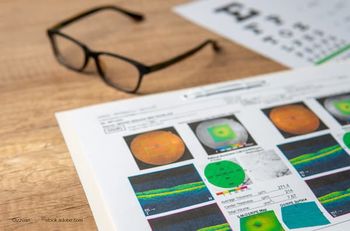
Siegfried G. Priglinger, MD, FEBO, weighs in on the emerging rationale for gas-free, position-free macular hole surgery using an ILM flap.
Siegfried G. Priglinger, MD, FEBO, weighs in on the emerging rationale for gas-free, position-free macular hole surgery using an ILM flap.
Patricio G. Schlottmann, MD, examines why injection frequency drives treatment failure in wet AMD and the particular challenges facing patients in Latin America.

Victor M. Villegas, MD, discusses supraorbital vibration as an adjunct to topical anesthesia in a high-volume retina practice.
Posture, operating room setup, and small workflow adjustments can reduce cumulative neck and back strain over time.
Jay Chhablani, MD, on multimodal imaging, OCT biomarkers, and the importance of early diagnosis as treatment options emerge

Matias Iglicki, MD, PhD, discusses why internal limiting membrane peeling deserves greater consideration in carefully selected patients with DME.

Charlie Zhang, MD, reflects on the rising incidence, diagnostic challenges, and multidisciplinary management of immune checkpoint inhibitor–associated uveitis.

KOLs in the retina world reflect on advice they would share with fellows beginning their journey into retina, including the vast opportunities in healthcare and the importance of curiosity and collaboration for revolutionary advancements in retina medicine.

KOLs in the retina world reflect on advice they would share with fellows beginning their journey into retina, including the vast opportunities in healthcare and the importance of curiosity and collaboration for revolutionary advancements in retina medicine.

KOLs in the retina world reflect on advice they would share with fellows beginning their journey into retina, including the vast opportunities in healthcare and the importance of curiosity and collaboration for revolutionary advancements in retina medicine.

KOLs in the retina world reflect on advice they would share with fellows beginning their journey into retina, including the vast opportunities in healthcare and the importance of curiosity and collaboration for revolutionary advancements in retina medicine.
KOLs in the retina world reflect on advice they would share with fellows beginning their journey into retina, including the vast opportunities in healthcare and the importance of curiosity and collaboration for revolutionary advancements in retina medicine.

KOLs in the retina world reflect on advice they would share with fellows beginning their journey into retina, including the vast opportunities in healthcare and the importance of curiosity and collaboration for revolutionary advancements in retina medicine.

A hope for reducing treatment burden for wet age-related macular degeneration with a sustained-release vorolanib intravitreal insert
Retina specialist Jay Chhablani, MD, discusses 3D choroidal vessel segmentation, uncovering critical insights into macular degeneration, diabetic retinopathy, and potential systemic disease connections using advanced OCT technology.
International retina specialists converge to explore groundbreaking treatments, drug delivery systems, and surgical innovations at the Retina World Congress 2025.
Breakthrough suprachoroidal injection technique offers promising treatment for diabetic retinopathy, reducing visual threatening complications from 37% to 4% with minimal inflammation and office-based procedure.
Two FDA-approved geographic atrophy treatments show significant patient dropout, with 45% discontinuation by 18 months, driven by baseline vision, CNV, and lack of immediate visual improvement.
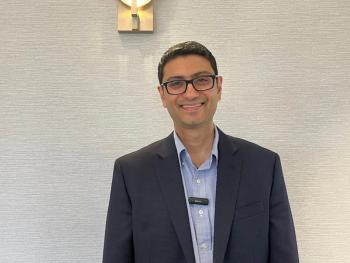
Ophthalmologist Dilraj Grewal explores cutting-edge clinical trials for uveitis treatment, highlighting new targeted therapies that aim to control inflammation and macular edema with fewer steroid-related side effects.

Lexitas Pharma Services' CMO discusses groundbreaking ophthalmology conference, emphasizing innovative clinical trials, emerging treatments for eye diseases, and the potential for transformative patient care strategies.
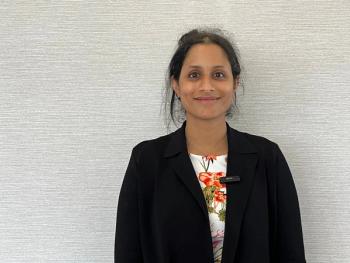
Retina specialist Priya Vakharia, MD, reveals promising ANX007 trial results, showing potential to prevent vision loss in geographic atrophy.
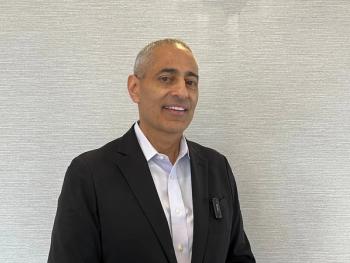
Ophthalmologist Tarek Hassan introduces new surgical approach for proliferative vitreoretinopathy, using precise small retinotomies instead of extensive retinal removal to improve patient outcomes.
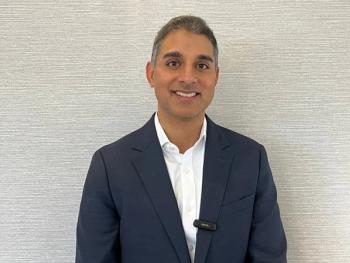
Ultra-wide field imaging shows nonperfusion and leakage independently predict diabetic retinopathy progression, suggesting earlier treatment with anti-VEGF or photocoagulation may prevent complications.
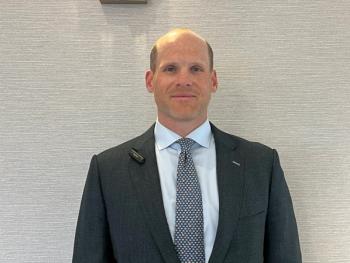
Four-year study shows faricimab in treat-and-extend regimen maintains vision for diabetic macular edema patients with significantly fewer injections over time.
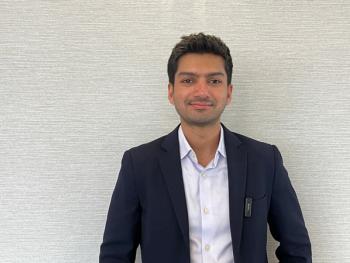
Kapil Mishra, MD, discusses an overview of radiation retinopathy and its challenges in treating uveal melanoma from his presentation "Radiation Retinopathy: Future Strategies,"
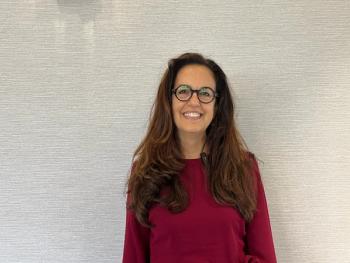
Duke professor Sharon Fekrat, MD, discusses AI-driven ophthalmology with smartphone diagnostics and robotic procedures, emphasizing global collaboration and innovative medical research.

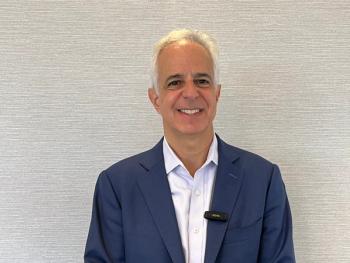
At Retina World Congress 2025, Dilsher S. Dhoot, MD, shares updates on the HELIOS trial and the potential future of tyrosine kinase inhibitors (TKIs).