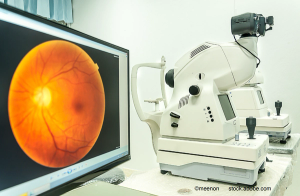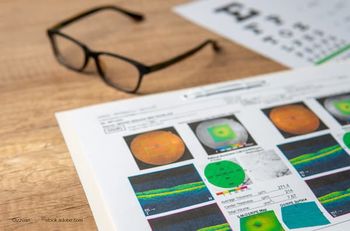
Siegfried G. Priglinger, MD, FEBO, weighs in on the emerging rationale for gas-free, position-free macular hole surgery using an ILM flap.
Sheryl brings a wealth of editorial experience to MJH Life Sciences’ Eye Care Network, having engaged with the readers and the greater ophthalmic community of Ophthalmology Times for more than 20 years. As Group Editorial Director, Sheryl’s purview extends across the print and digital network of Ophthalmology Times, Ophthalmology Times Europe, Modern Retina and Optometry Times. Prior to ophthalmology, Sheryl previously covered the fields of audiology and confectionery science/technology/manufacturing.
Sheryl is also passionate about the mission, vision and values of Ophthalmic World Leaders (OWL) and recently completed her term on its Board of Directors. She continues to volunteer as Editor-in-Chief of the organization’s EMPOWER Magazine. In 2013, she was honored with the group’s inaugural Rising Star Award.
In addition, she has served as a judge for Crain's Cleveland Business Health Care Heroes Awards program as well as the Jesse H. Neal National Business Journalism Awards.
Siegfried G. Priglinger, MD, FEBO, weighs in on the emerging rationale for gas-free, position-free macular hole surgery using an ILM flap.
Patricio G. Schlottmann, MD, examines why injection frequency drives treatment failure in wet AMD and the particular challenges facing patients in Latin America.

Victor M. Villegas, MD, discusses supraorbital vibration as an adjunct to topical anesthesia in a high-volume retina practice.

Posture, operating room setup, and small workflow adjustments can reduce cumulative neck and back strain over time.
Jay Chhablani, MD, on multimodal imaging, OCT biomarkers, and the importance of early diagnosis as treatment options emerge

Matias Iglicki, MD, PhD, discusses why internal limiting membrane peeling deserves greater consideration in carefully selected patients with DME.

Charlie Zhang, MD, reflects on the rising incidence, diagnostic challenges, and multidisciplinary management of immune checkpoint inhibitor–associated uveitis.

Steffen Schmitz-Valckenberg, MD, discusses how optical coherence tomography-based models may enable rapid, noninvasive assessment of functional loss in GA.

Early clinical experience highlights considerations for patient selection, surgical technique, and long-term monitoring in retinal disease.

The FDA noted in the letter that it is unable to approve the application for ONS-5010/LYTENAVA (bevacizumab-vikg) in its current form for the treatment of wet AMD.

Dr. Quan Dong Nguyen presents interim data from the phase 3 DRAGON study on a potential first therapy for adolescent Stargardt disease.
Dr. Sharon Fekrat presented a retrospective analysis assessing how antiplatelet and anticoagulant therapy relates to hemorrhage characteristics and outcomes.

Prof Dr Rajvardhan Azad explains how unified guidelines, AI-driven tools, and cross-disciplinary collaboration could transform outcomes for premature infants.
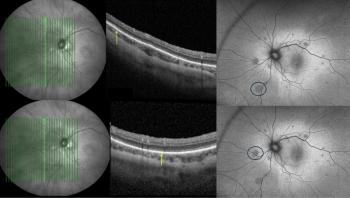
Priyanka Sanghi, BSc, MSc, MBBS, highlights how fundus autofluorescence and optical coherence tomography may help uncover long-term retinal footprints invisible to standard examination.

Dr. J. Peter Campbell discusses the technologies shaping retinopathy of prematurity detection, clinical integration, and global implementation.

Kenneth C. Fan, MD, discusses promising visual improvements from MCO-010 therapy for Stargardt disease at AAO 2025, highlighting future treatment potential.

Research on aflibercept 8 mg reveals promising real-world outcomes for treating wet AMD and diabetic macular edema, enhancing vision and safety.

Stephen Tsang, MD, PhD, reviews promising optogenetic therapy results for retinitis pigmentosa and Stargardt disease, enhancing vision and mobility for patients.

Ophthalmologists weigh in on how the extended-duration therapy may reduce treatment burden for patients with wet age-related macular degeneration.
Retina specialists share their perspectives on evolving anti-VEGF therapy, pipeline treatments, and strategies to enhance patient outcomes.

A new study reveals a promising drug reduces vision loss in Stargardt disease, showing significant safety and efficacy over 2 years.
While the STAR trial showed significant reductions in myopia progression, including over 50% in fast-progressing children, the FDA requires additional evidence to support US approval.

Gildeuretinol has also been evaluated in atrophic age-related macular degeneration, said Philip J. Ferrone, MD
The newest research findings create "tangible benchmarks" for how earlier treatment can lead to better outcomes, said Dr. Kim.

The topical therapy offers a less invasive approach to corneal cross-linking, with commercial availability anticipated in early 2026.
Dr. Singh reported that when technicians understand why they are performing a diagnostic test, they perform better and think critically in patient care situations.
AAO attendees can preview the new technician training platform on Sunday, October 19.

The video-driven platform will improve workflow, education and engagement, said Inder Paul Singh, MD.
Phase 1/2 interim results highlight real-world functional enhancements in patients with severe LCA5-related Leber congenital amaurosis.

NASA’s development of autonomous eye imaging technologies for astronauts aboard the International Space Station is paving the way for remote, high-quality eye care both in deep space and underserved regions on Earth.

August 26th 2023

October 20th 2025

May 9th 2026