


XIPERE, the first therapy utilizing the suprachoroidal space, demonstrates rapid efficacy, durable benefit, and favorable safety profile.
XIPERE, the first therapy utilizing the suprachoroidal space, demonstrates rapid efficacy, durable benefit, and favorable safety profile.

Susvimo, previously called the Port Delivery System with ranibizumab, is a first-of-its-kind therapeutic approach for wet AMD and may help people with the disease maintain their vision with as few as two treatments per year.
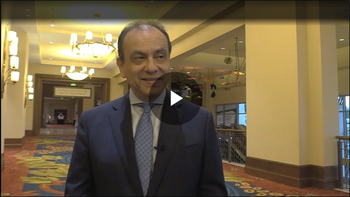
Dr. Victor Gonzalez discusses his presentation at ASRS, regarding 0.19mg fluocinolone acetonide implants in diabetic macular edema (DME) patients.

A poll for retina specialists regarding their attendance at the 2021 American Academy of Ophthalmology Meeting in New Orleans, Louisiana. This poll is now closed.
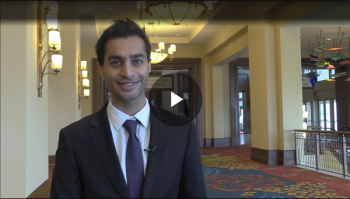
Nimesh Patel, MD, discusses his presentation entitled, "Scleral-Sutured Intraocular Lens Dislocations Secondary to Eyelet Fractures" at ASRS.

Luminopia One is one of few digital therapeutics to receive FDA approval via the de novo pathway, and it is the first for amblyopia, and for a neuro-visual disorder in general.

Investigators find that long-term ocular complications require further observation.

The development-stage biotechnology company Omega Therapeutics is teaming up with Stanford University to investigate therapies for ocular diseases via control of specific ocular disease genes.
On October 14, we celebrate World Sight Day by pledging to receive annual eye exams, preventing or slowing vision loss, and showing love for our eyes.
Today marks World Sight Day, an annual day of awareness intended to focus global attention on blindness and vision impairment. Coordinated by the International Agency for the Prevention of Blindness, this year’s call is for everyone to “Love Your Eyes.”

A review of studies, presentations and discussions at ASRS 2021 in San Antonio, Texas.
Ankur Shah, MD, discusses key highlights of his presentation titled "YUTIQ CALM: a real-world registry study of the fluocinolone acetonide intravitreal implant 0.18 mg in chronic non-infectious posterior uveitis," during ASRS 2021.
Paul Hallen discusses the Retina Industry Insights panel at the Ophthalmology Innovation Summit in San Antonio, Texas.

The FDA approved Ocular Therapeutix Inc.’s Supplemental New Drug Application (sNDA) that further extends Dextenza’s (dexamethasone ophthalmic insert) 0.4 mg indications, the company announced Monday.

During the American Society of Retina Specialists 2021 annual meeting, David Boyer, MD, told attendees that pegcetacoplan used to treat geographic atrophy proved to be well tolerated by patients in the phase 3 DERBY and OAKS studies.

In a presentation at the American Society of Retina Specialists 2021 annual meeting, Arshad Khanani, MD, MA, noted that investigators achieved results similar to those in patients treated with monthly ranibizumab injections for neovascular age-related macular degeneration.

Speaking at the American Society of Retina Specialists 2021 annual meeting, Richard B. Rosen, MD, DSc (Hon) noted that clinical OCT and offers a new clinical biomarker for tracking the onset and progression of retinal vascular disease and the response to therapy.
Justis P. Ehlers, MD, discusses the findings from a higher-order OCT analysis for inflammatory signal biomarkers in the HAWK Study.

During a presentation at American Society of Retina Specialists 2021 annual meeting in San Antonio, Sunir Garg, MD, presented data showing that universal masking does not seem to increase the risk of developing endophthalmitis, and it may cause a reduction in culture positive endophthalmitis.

During a presentation at the American Society of Retina Specialists 2021 annual meeting in San Antonio, Texas, Yoshihiro Yonekawa, MD, warned of the potential risk of endophthalmitis with the use of implantable MIGS devices.

Speaking at the American Society of Retina Specialists 2021 annual meeting in San Antonio, Rishi P. Singh, MD, provided results of the VISTA and VIVID studies, and he pointed out that the findings could help physicians set expectations of DME therapy.
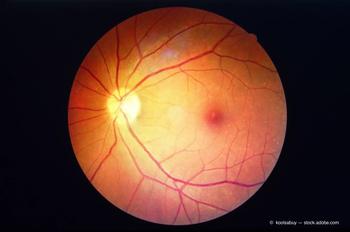
During a presentation at the American Society of Retina Specialists 2021 annual meeting in San Antonio, W. Lloyd Clark, MD, presented results of the PANORAMA Study. The focus of the study, Clark said, was to identify the factors that increase the risk of complications in patients with nonproliferative diabetic retinopathy to provide information for making decisions on treatment choices.
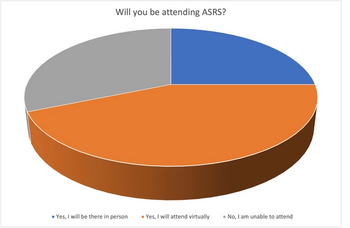
Results from our recent poll about ASRS 2021 meeting attendance shows that ophthalmologists are ready to participate in events, both in-person and online.

Proposal hints at the use of generative adversarial network (GAN) for applications in macular surgery.

The EIDON Ultra-Widefield Lens module from iCare USA has received 510(k) approval from the FDA for distribution in the US.

MicroPulse can reduce burden of injections for patients with diffuse diabetic macular edema.
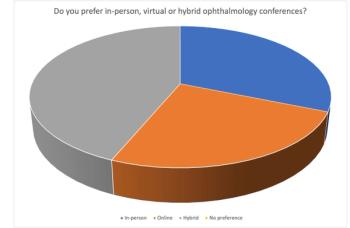
Results from our recent poll about meeting attendance preferences show an inclination toward flexibility.
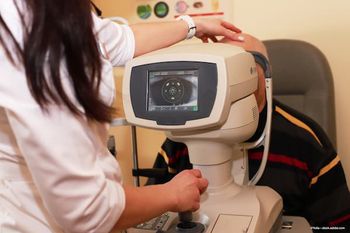
Investigators hope to develop a novel artificial intelligence model.
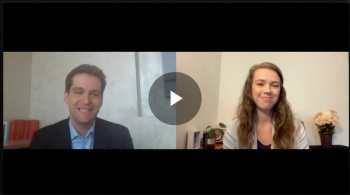
In the final installment of his COVID-19 interview series, Dr. Breazzano discusses the positive lessons he's learned during the crisis.

Researchers set out to identify clinical and anatomic factor-associated vision loss in eyes with treatment-naïve DME and good initial VA.